
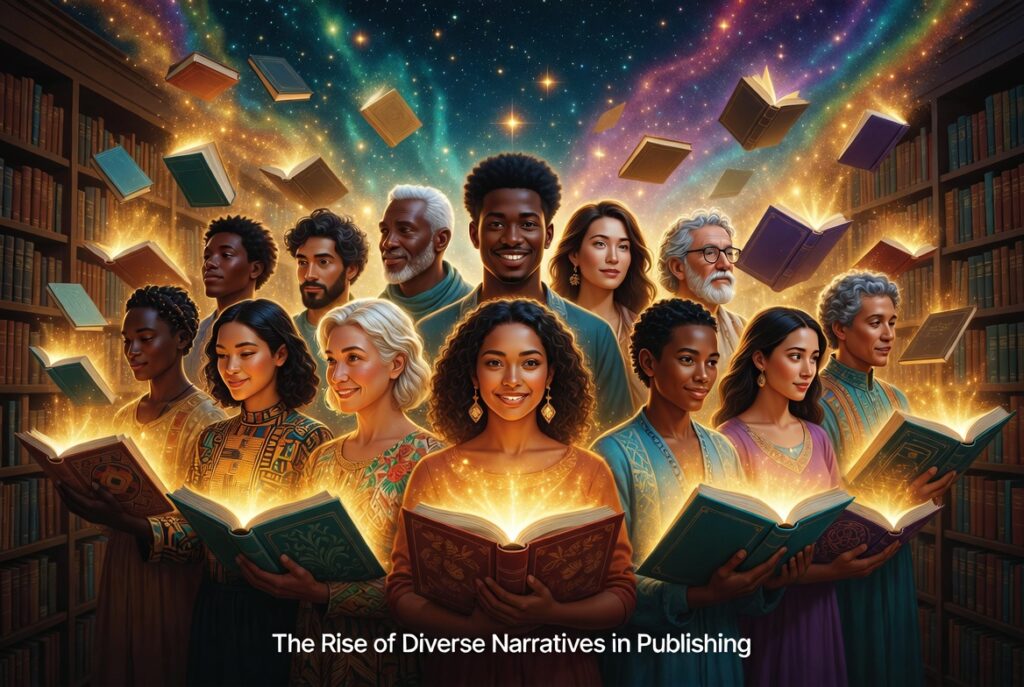
For decades, mainstream publishing reflected a narrow slice of human experience — predominantly white, straight, able-bodied voices from Western perspectives. Today, that is changing. Diverse narratives — stories featuring characters, authors, and perspectives from BIPOC (Black, Indigenous, People of Color), LGBTQ+, disabled, neurodivergent, and global communities — are surging in visibility, sales, and cultural impact. What was once a niche demand has become a powerful market force reshaping the industry.
Measuring the Progress
Data shows meaningful, though uneven, advancement. In children’s and YA publishing, the Cooperative Children’s Book Center (CCBC) reported that in 2024, over 51% of received titles featured significant BIPOC content or characters — a steady climb from previous years. Representation of Black (16%), Asian (13%), and Indigenous (3%) experiences grew notably. Books with at least one BIPOC creator also edged up to 41%.
LGBTQ+ fiction has seen explosive commercial growth. Sales of LGBTQ titles reached around 4.4 million units in a recent 12-month period, up 7% year-over-year and a staggering 200% from four years earlier — even as overall fiction sales sometimes dipped. YA LGBTQ stories in particular drove much of this momentum.
In the publishing workforce itself, the Lee & Low Diversity Baseline Survey 3.0 (2023 data) found 72.5% of staff identifying as White/Caucasian — improved from 76% in 2019 and 79% in 2015, but still far from reflecting population demographics. Progress appears stronger among newer hires and in biracial/multiracial identification (up to 8.4%). Sexual orientation data showed 32% of publishing employees identifying as LGBTQ+, up notably from earlier surveys.
Market analysts now cite increasing demand for diversity in content as a direct driver of growth in the global publishing sector, alongside the rise of self-publishing that bypasses traditional gatekeepers.
What’s Fueling the Rise?
Several interconnected forces are accelerating this shift:
- Reader Demand and Social Media: Platforms like BookTok have democratized discovery. Young readers, especially Gen Z, actively seek stories that reflect their identities or expand their worldviews. Viral trends have boosted not only romantasy but also culturally rich fantasy, queer romance, and stories from underrepresented voices. One in three BookTok users report discovering books by authors from different cultures.
- Self-Publishing Empowerment: Indie authors from marginalized backgrounds can publish authentically without waiting for traditional approval. Combined with tools for editing, design, and global distribution, this has flooded the market with fresh perspectives — particularly in romance, fantasy, and memoir.
- Publisher Initiatives and Market Reality: Major houses have launched diversity acquisition programs, mentorships, and #OwnVoices-focused imprints. Commercial success proves the point: diverse titles aren’t just “important” — they sell. Romantasy and genre fiction with inclusive casts often lead bestseller lists.
- Cultural and Generational Shifts: Post-2020 conversations around equity, combined with a more globally connected audience, have made authentic representation a competitive advantage rather than a checkbox.
Why Diverse Narratives Matter
Diverse stories do more than sell books — they expand empathy, challenge assumptions, and enrich literature. Readers see themselves as heroes, not sidekicks. Others gain windows into lives different from their own. In genres like romantasy (which pairs perfectly with your earlier posts on the genre), diverse protagonists bring layered magic systems rooted in real cultural mythologies, queer fated-mate arcs, and heroines who defy multiple forms of oppression.
The rise also strengthens the industry: broader talent pools, innovative storytelling, and resilient sales in a fragmented attention economy.
Challenges persist. Workforce diversity lags behind content gains. Marketing budgets for diverse titles can still be inconsistent. Book bans disproportionately target LGBTQ+ and BIPOC stories. Yet the trajectory is clear — self-publishing, digital platforms, and reader power continue to erode old barriers.
The Road Ahead
As we move through 2026, expect even richer narratives: more intersectional stories, global translations, and hybrid works blending cultural heritage with speculative fiction. Self-published authors and small presses are leading innovation, while traditional publishers adapt to stay relevant.
The publishing world is becoming a truer mirror of humanity — messy, vibrant, and full of voices long overdue.
Diverse narratives aren’t a trend. They’re the future of storytelling.
What diverse book or author has stayed with you lately? Have you noticed more inclusive stories in romantasy, thrillers, or literary fiction? Share your favorites or thoughts in the comments — let’s celebrate and recommend the voices shaping modern literature.
Read widely. Read boldly. Every story deserves its page.
(This post connects naturally with the surge in self-publishing, the audiobook boom that makes stories more accessible, and the popularity of romantasy — genres where diverse voices are thriving through direct-to-reader channels and immersive audio experiences.)